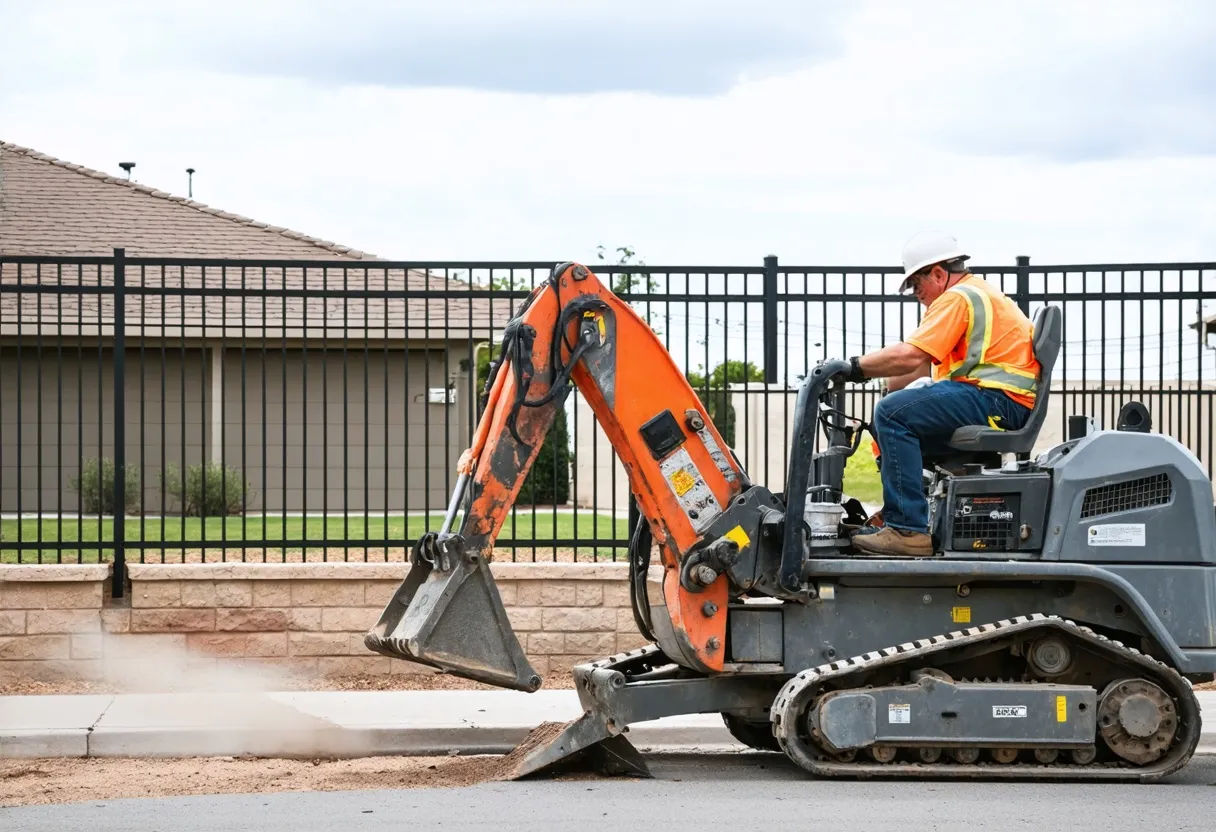
Fencing Chandler Pros repairs sagging fences, rotted wood, rusted metal, warped panels, and broken boards throughout Chandler, AZ — and we do it with two things almost every other fence company in this market leaves out: an upfront price before any work starts, and real working knowledge of Chandler's mandatory pool-fence code. If you've searched "fence repair Chandler" and landed on a page that makes you call for a quote or guesses at your barrier requirements, you're in the right place instead.
Whether you need a single broken board replaced, a leaning gate re-hung, or a full pool enclosure brought back into compliance, this page walks through exactly what we fix, how the repair process works, what drives the price, and how to choose a contractor who won't leave you guessing. If you'd rather jump straight to numbers, our fence repair cost breakdown for Chandler lays out real price ranges by material and damage type.
What Our Chandler Fence Repair Service Covers
Fence repair isn't one job — it's a category of jobs, and the right fix depends entirely on the material, the damage, and how the fence is actually used. Our crews handle:
- Board, panel, and picket replacement on wood and composite fences
- Post replacement and re-setting for leaning, sagging, or wind-damaged sections
- Gate realignment, hinge and latch repair, and self-latching hardware installation for pool enclosures
- Rust removal, section replacement, and coating on chain link and iron fencing
- Rail and panel repair on vinyl and aluminum fencing, including UV-related cracking
- Block wall crack repair, cap replacement, and stucco patching
- Full section rebuilds after storm damage, vehicle impact, or long-term neglect
- Pool barrier repairs and upgrades to bring older enclosures up to current code
We also install new fencing when repair no longer makes financial sense — our wood fence installation and repair guide, chain link fencing page, and wrought iron fence page go deeper on those specific materials if that's the direction you're leaning.
Common Fence Damage We Fix in Chandler's Climate
Chandler's combination of intense desert sun and occasional strong wind events puts a specific kind of stress on fencing that you don't see in milder climates. Fences here fail in fairly predictable ways, and knowing the pattern helps you catch problems before a small repair becomes a full rebuild.
Wood Rot and Splitting
Wood fencing takes the brunt of UV exposure in this market. Years of direct sun dry out the wood fibers, causing surface checking and splitting long before the post itself fails. Rot shows up differently — usually at the base of posts or wherever water pools against a board, such as low spots near a sprinkler head or a downspout. We probe every post at grade level during an inspection because rot below the soil line often looks fine from a few feet away while the wood underneath has gone soft.
Rust and Metal Corrosion
Chain link, iron, and aluminum fencing all corrode differently. Chain link mesh typically rusts first at cut ends and weld points; iron fencing rusts wherever the powder coat or paint has chipped, letting moisture reach bare steel; aluminum generally resists rust but can pit and oxidize at fastener points. Left alone, surface rust on iron fencing spreads under the coating and eventually weakens the pickets themselves, which is why we treat rust repair as a coating problem, not just a cosmetic one.
Warping and Board Cupping
Wood and vinyl both react to Chandler's heat swings between scorching afternoons and cooler nights. Wood boards cup or bow as moisture content changes unevenly across the board; vinyl panels can soften and deform in direct summer sun, especially darker colors. Warped boards rarely go back to flat on their own and are usually a replacement, not a repair.
Sagging Fences and Leaning Posts
Sagging is one of the most common calls we get, and it has a few root causes: a post footing that has loosened or cracked over time, wind load working a post back and forth until the concrete collar fails, a gate whose hinges have worn and pulled the whole section out of square, or simple age-related settling. A sagging fence is almost always a post-and-footing problem wearing a "bad panel" disguise — which is why our repair process always starts by checking the posts, not just the visible damage.
Broken, Cracked, or Missing Boards
Impact damage (landscaping equipment, vehicles, storm debris, pets) and simple end-of-life brittleness both produce broken boards. Matching existing board width, spacing, and finish matters more than people expect — a mismatched replacement board is one of the most common complaints homeowners have about past repair jobs, and it's an easy problem to avoid with the right materials on the truck.
Our Fence Repair Process, Step by Step
We run every repair through the same structured process, whether it's a single board or a full section rebuild:
- Phone or online scoping. We ask what material you have, roughly how much of the fence is affected, and whether it's a pool enclosure — this determines whether code compliance needs to be part of the visit.
- On-site inspection. A technician walks the full fence line, not just the damaged section, checking posts at grade level, gate hardware, footing condition, and hidden rot or rust that isn't visible from a distance.
- Written, itemized estimate. You get a price broken out by material, labor, and any hardware or permit costs — before we touch anything. No verbal ballpark, no "we'll know once we open it up" surprises.
- Scheduling and material match. We source matching lumber, mesh, pickets, or panels so repaired sections blend with the existing fence rather than creating a visible patchwork.
- Repair execution. Posts are reset in fresh concrete where needed, damaged boards or panels are replaced, hardware is adjusted or swapped, and rusted or rotted sections are cut back to solid material before anything new goes in.
- Gate and hardware check. Every repair includes a gate function check — proper swing, latch engagement, and for pool enclosures, self-latching hardware operation.
- Final walkthrough. We review the completed work with you on site before calling the job done, and back it with our fence repair warranty.
For sagging fences specifically, steps 2 and 5 do the real work: we dig down to inspect the footing rather than just re-tensioning or bracing the visible sag, because a fix that doesn't address the post base tends to fail again within a season or two.
Fence Materials We Repair
Different materials fail differently and need different repair techniques. Here's how we approach each:
Wood
The most common material we repair in Chandler. Board-for-board replacement, post resets, rail sistering (reinforcing a weakened rail rather than replacing the whole section), and refinishing to protect against further sun damage. See our wood fence page for species options and finish recommendations suited to desert exposure.
Vinyl
Panel and rail replacement, post cap repair, and re-securing panels that have popped out of their post channels from wind or heat expansion. Vinyl can't be patched the way wood can — damaged sections are swapped whole, so color-matching against sun-faded existing panels is part of the estimate conversation.
Chain Link
Mesh section replacement, top rail straightening, tension wire re-tightening, post plumb correction, and rust treatment. Chain link is usually the most cost-effective material to repair, which makes it a good fit for larger commercial or side-yard runs. More detail is on our chain link fencing services page.
Iron
Rust removal, picket straightening or replacement, weld repair, and recoating. Iron fencing repair is detail work — matching scroll patterns, picket spacing, and finish on an older ornamental fence takes more fabrication skill than most other materials. Our wrought iron fence page covers styles and finish options in more depth.
Aluminum
Similar in approach to iron but lighter and rust-resistant. Repairs typically involve panel replacement, post alignment, and fastener corrosion at connection points rather than the widespread rust issues iron can develop.
Composite
Board and panel replacement using matched composite stock. Composite resists rot and insect damage well, so most repair calls are impact damage or fastener failure rather than material breakdown.
Block Wall
Crack injection or patching, cap replacement, stucco and color-coat repair, and rebuilding sections that have failed at the footing. Block wall cracking is common where a wall section has settled unevenly, and we assess whether a crack is cosmetic or structural before recommending a fix.
Chandler Pool Fence Code Compliance
This is where we spend more time than most fence companies bother to, and it matters if your property has a pool. Chandler requires a dedicated pool barrier separate from any perimeter fencing — typically a 6 to 7 foot masonry or decorative barrier — with self-latching gate hardware, and a permit is required for the enclosure. (F1)
A lot of pool fence "repairs" we get called out for aren't really repairs at all — they're compliance gaps that have existed since the fence was installed, or that developed as hardware wore out over the years. A latch that no longer catches reliably, a gate that's been re-hung slightly out of alignment, or a barrier section that's dropped below the required height after a post settled are all things an inspector (or an insurance adjuster after an incident) will flag, even if the fence looks fine to the eye.
When we quote pool-adjacent fence work, we check barrier height, gate self-latching function, and overall enclosure continuity as part of the standard inspection — not as an upsell. If a repair would leave your enclosure out of compliance, we tell you before doing the work, not after. If you're planning any pool fence work and need to pull a permit, we can walk you through what that process looks like for your specific property.
Commercial and Security Fencing Repair
Commercial properties in Chandler have different failure points than residential fences, mostly driven by heavier use, larger spans, and higher security requirements. We repair:
- Warehouse and industrial perimeter fencing — large-span chain link and welded wire repair, gate motor and rolling gate hardware adjustment, and post replacement on high-wind-exposed runs
- Anti-climb fencing — repair and reinforcement of tight-mesh and specialty anti-climb panels without compromising the security profile of the system
- Security gates — realignment, hinge and roller replacement, and access hardware repair for sliding and swing commercial gates
Commercial repair jobs almost always need to work around business hours, and we scope those jobs with that constraint built into the estimate rather than as an add-on fee discovered later.
Custom and Specialty Fence Styles
Beyond standard residential and commercial fencing, we repair and maintain a number of specialty styles that need more specific expertise:
- Cable rail fencing — re-tensioning stretched or slack cable runs and replacing corroded terminal hardware
- Wire fencing — mesh and welded wire repair for property division and containment use
- Farm and ranch-style fencing — rail replacement, post resets, and gate repair on split-rail and pipe fence layouts
- Horizontal fencing — board replacement and refastening on modern horizontal-slat designs, where consistent gap spacing matters for the finished look
Specialty styles are more likely to need custom-cut or specially sourced material, so these repairs usually take a bit longer to schedule material for than standard picket or chain link work — something we flag up front rather than after you've already committed to a date.
What Affects the Cost of Fence Repair in Chandler
Fence repair pricing depends on more than just "how many feet." The variables that actually move the number are:
- Material — iron and custom composite repairs run higher than chain link or standard wood due to material cost and labor complexity
- Damage type — a broken board swap is a fraction of the cost of a post reset, which requires digging out and re-pouring a footing
- Number and location of posts affected — post work is the single biggest cost driver in most sagging-fence repairs
- Access — fencing behind locked gates, dense landscaping, or a pool enclosure with limited clearance takes longer to work around
- Matching requirements — sourcing a stain, color, or picket profile that matches faded existing fencing can add cost versus a straight material swap
- Code compliance work — if a pool barrier repair needs to bring hardware or height up to current requirements, that scope gets priced separately from cosmetic repair
- Permit requirements — pool enclosure work that requires a permit adds processing time and a permit fee to the project
Because these variables swing the price so much, we don't quote fence repair over the phone with any confidence, and we're skeptical of anyone who does. We give you a real number after a real look at the fence. For typical ranges by material and job type, see our detailed fence repair cost breakdown.
Free Estimates and Our No-Obligation Guarantee
Every estimate we provide is free and comes with no obligation to book the work. You'll get an itemized, written number before we schedule anything, and that number is what you pay — not a floor that grows once the crew shows up. If we find additional damage once a repair is underway (which happens most often with hidden post rot), we stop and get your approval before doing anything beyond the original scope.
All repair work is backed by our fence repair warranty, which covers both materials and workmanship. We'd rather explain warranty terms clearly upfront than have you find out what's covered after something goes wrong.
Why Chandler Homeowners and Businesses Choose Us
We're based in and around Chandler, working properties from the neighborhoods near Downtown Chandler and Dr. A.J. Chandler Park out toward the retail corridor around Chandler Fashion Center, and residential areas near Tumbleweed Park. That local footprint means we're familiar with the mix of newer stucco-and-block subdivisions and older wood-fenced properties that make up this market, and we regularly serve properties in nearby Mesa, AZ as well.
Two things separate us from most of the other names that show up when you search fence repair in this area:
- Transparent, written pricing before work begins — no phone-quote guessing games and no inflated "final invoice" surprises
- Genuine pool-fence code expertise — we know Chandler's barrier height, latch, and permit requirements cold, and we check for compliance gaps as a standard part of any pool-adjacent repair, not as an upsell
Combine that with material-specific know-how across wood, vinyl, chain link, iron, aluminum, composite, and block wall, and you get a repair that's priced honestly and built to actually hold up against Chandler's sun and wind.
What Our Customers Value
The feedback we hear most consistently from Chandler customers isn't about any single repair — it's about the estimate process itself. People are used to fence contractors who won't commit to a number until they're standing in your yard with an invoice pad, or who quote low and then find "extra" damage once the job starts. What customers tell us they appreciate is knowing the price before committing, getting a straight answer about whether their pool enclosure meets code, and having a repaired section actually match the rest of their fence instead of standing out as an obvious patch job. If you'd like to see how we handle a project end to end, our estimate process is the same whether it's a single board or a full pool enclosure rebuild.
Get Your Free Quote
No obligation, no pressure — just a clear picture of cost and compliance.
More fencing services
Ready For A Fence That Fits Chandler?
Get a clear, upfront quote — including pool-code details if they apply to your property.